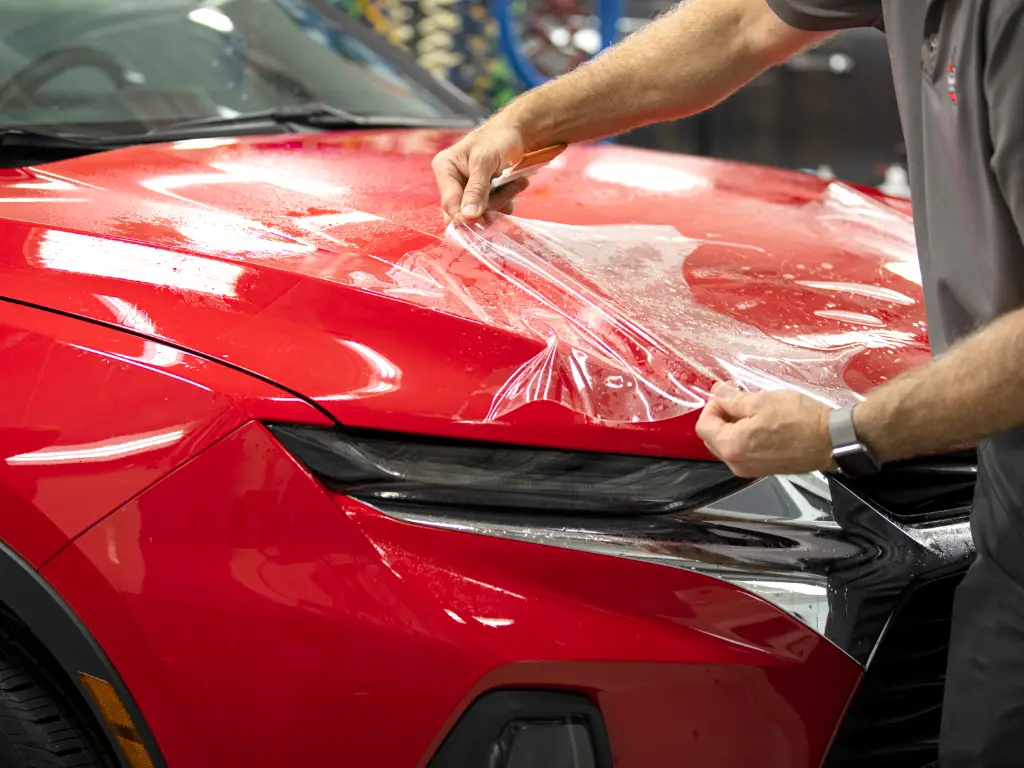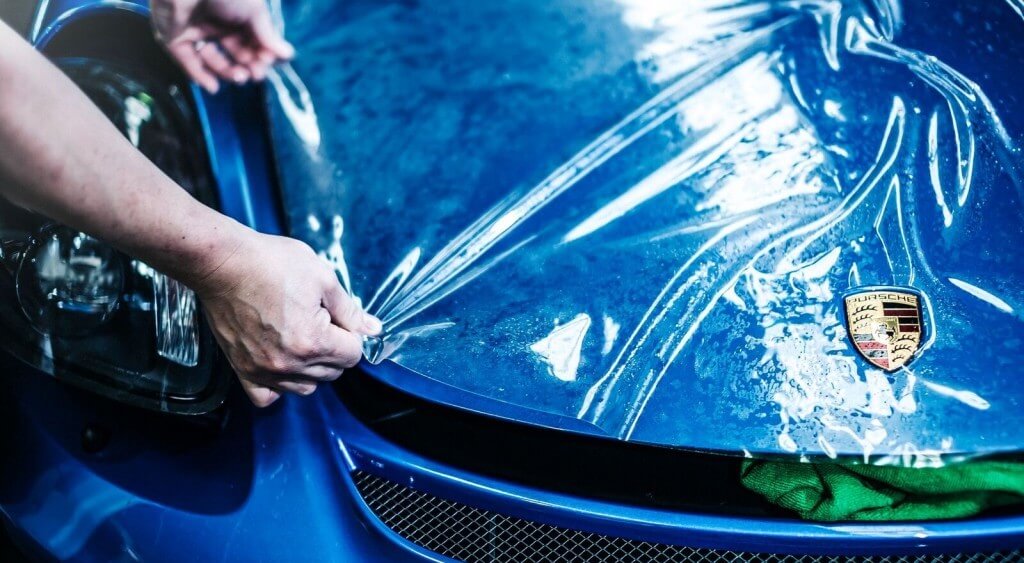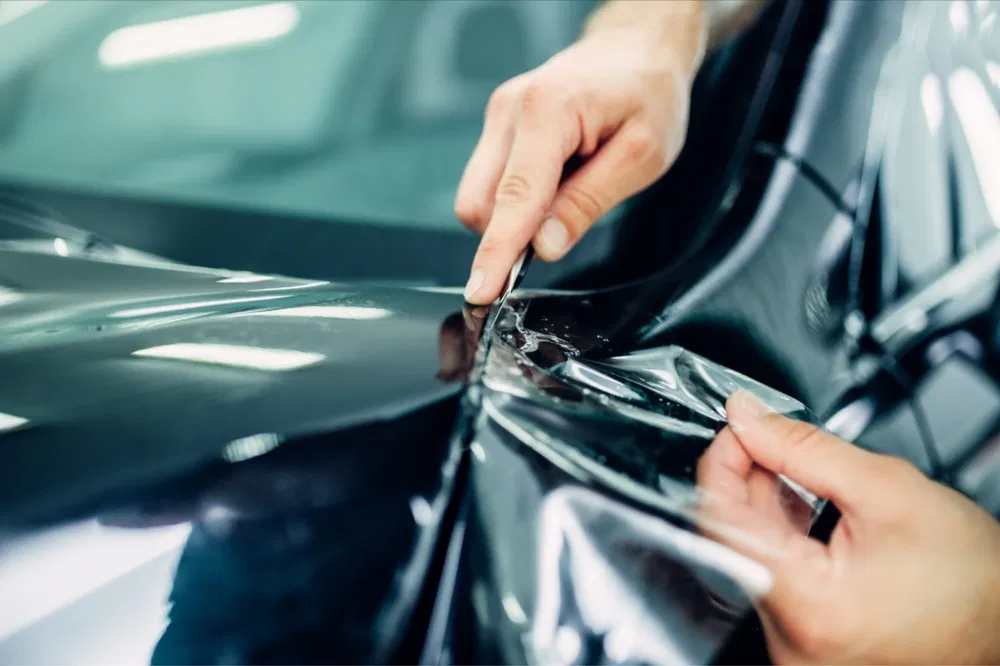
Paint Protection Film has come a long way from the stiff, edge-prone sheets that garage installers used to wrestle onto bonnets in the early days of the technology. The version that matters today, the version that makes sense for any car owner serious about protecting their investment, is self-healing PPF. And within that category, FlexiShield is the film that sets the standard.
At Optimum Premium Detailing, we are the official distributor of FlexiShield USA in Karachi. Every film we install carries the full manufacturer warranty and comes from the same production line that supplies certified installer networks across more than 30 countries. This article covers how self-healing PPF actually works, what separates FlexiShield’s approach from the rest of the market, and which film in the lineup is right for your specific car and driving conditions.
What Self-Healing PPF Actually Does to Your Paint
A self-healing film does exactly what the name implies, it repairs surface-level damage on its own, without polishing, correction, or intervention. When a car wash brush leaves swirl marks, when a shopping trolley catches the door, when a branch scrapes the side panel at low speed, the film absorbs the damage and then closes it. The paint underneath never sees any of it.
The mechanism is thermally driven. When the film’s surface is disrupted, scratched, scuffed, or swirled, the material’s molecular structure is momentarily displaced. Heat, whether from direct sunlight, warm water, or a heat gun, triggers the polymer chains to flow back into their original alignment. Within hours, in most cases, the surface looks untouched.
This is not a surface coating or a topical treatment that wears away over time. It is a structural property of the film itself, built into the thermoplastic polyurethane layer at the material level. It does not diminish with use. It functions on the first scratch and on the thousandth.
What self-healing does not do is absorb deep gouges, heavy impacts, or structural panel damage. It is designed for the category of surface damage that accumulates over daily driving, the invisible accumulation of micro-abrasion that eventually turns a glossy finish dull, and the light contact damage that most car owners notice and most detailers spend time correcting. Self-healing PPF eliminates that entire category of damage permanently.
The Science Behind FlexiShield’s Self-Healing Technology
FlexiShield is manufactured by Reflek Technologies Corporation in Chandler, Arizona, USA. The self-healing performance in their film is a product of the specific co-polymer engineering in the thermoplastic polyurethane (TPU) core, not a feature added on top of a standard film, but a characteristic of the material itself.
TPU is already a well-established material in demanding applications: medical tubing, industrial seals, high-performance footwear, contexts where flexibility, resilience, and resistance to degradation matter. In PPF, the challenge was engineering a TPU formulation that is both rigid enough to resist puncture and abrasion, and elastic enough to conform to complex car contours and self-repair after surface disruption.
FlexiShield’s solution was a precisely calibrated blend of hard and soft polymer segments within the TPU structure. The hard segments provide the film’s resistance to impact and penetration. The soft segments provide the elasticity and, critically, the thermal memory that allows the surface to rebind after contact damage. When heat is applied, the soft segment chains regain mobility and flow back into their pre-disruption configuration, effectively erasing the surface deformation.
The Role of the Top Coat
The self-healing mechanism sits primarily in the film’s top coat, a separate layer bonded to the TPU core that handles direct surface contact. In FlexiShield’s films, this top coat is engineered to be simultaneously hard enough to resist everyday abrasion and flexible enough to participate in the self-healing response. It also carries the UV-stabilising compounds that prevent yellowing, and the hydrophobic properties that cause water and contaminants to bead and shed rather than bonding to the surface.
Cheaper films often use a top coat that is either too hard, making it resistant to healing, or too soft, making it susceptible to permanent deformation. FlexiShield’s formulation sits in the precise range where the top coat heals completely without leaving residual surface distortion after repeated cycles.
Heat Activation in Real Conditions
In Karachi’s climate, summer sun alone is sufficient to trigger self-healing in most cases. Direct sunlight on a parked car brings the film’s surface to temperatures well above the activation threshold, meaning minor scratches accumulated during a week of driving effectively resolve themselves over a weekend of outdoor parking. In cooler conditions or shaded environments, warm water or a hand-held heat gun at controlled distance achieves the same result in minutes.
This is a practical advantage for Karachi specifically, a city where cars are regularly exposed to intense, direct UV radiation for long hours. The same conditions that make bare paint fade and degrade are the conditions that keep FlexiShield’s self-healing mechanism working at its most effective.
Which FlexiShield Films Carry Self-Healing, and How They Differ
Every film in the FlexiShield body protection lineup carries self-healing technology. The differences between variants are in thickness, finish, specific performance emphasis, and warranty coverage, not in whether self-healing is present. Here is how each film is positioned and where it is most effective:
FlexiShield WSH Pro, Maximum Gloss, Full Self-Healing
The WSH Pro is the flagship of the FlexiShield range. Built on an 8.5 MIL thermoplastic polyurethane core with a hyper-gloss top coat, it delivers the deepest visual finish of any film in the lineup while carrying the full self-healing capability of the FlexiShield system.
The silicone component in the WSH Pro’s construction amplifies how light interacts with the paint surface beneath, creating a depth and wet-look shine that often exceeds what the bare paint provides on its own. Swirl marks from automated car washes and light parking lot contact disappear through routine heat exposure. Bird droppings, tree sap, and road tar shed without bonding permanently. The 10-year manufacturer warranty covers yellowing, adhesive failure, and film degradation.
The WSH Pro is the right choice for luxury cars, premium SUVs, and any car where the visual quality of the finish is as important as the protection. It is the film we recommend for owners who want the film to actively enhance the car’s appearance rather than simply preserve it.
FlexiShield WSH, Proven All-Condition Performance
The WSH uses an 8.0 MIL TPU core with a high-gloss top coat and has been field-tested across a decade of real-world use in climates ranging from the Arizona desert to northern European winters. It is the most proven film in the FlexiShield lineup in terms of documented long-term performance data.
Self-healing performs identically to the WSH Pro, the co-polymer formulation is consistent across the range. The difference is in the specific gloss level of the top coat, with the WSH sitting slightly below the WSH Pro’s hyper-gloss finish while still delivering a deep, reflective surface that holds up through sustained UV exposure and daily driving. The 10-year warranty applies.
The WSH is the right choice for daily drivers, motorway commuters, and cars that see consistent highway exposure. It handles the full spectrum of surface damage that accumulates in normal use without requiring any owner intervention.
FlexiShield STH, Reliable Coverage Across All car Types
The STH uses 6.5 MIL TPU with a proven adhesive system that performs consistently across a wide range of car geometries. Where the WSH Pro and WSH are optimised for maximum gloss performance, the STH is optimised for reliable, consistent adhesion and self-healing across varied panel types and contour complexity.
For cars with complex body lines, pronounced curves, and tight panel transitions, the STH’s adhesive system ensures the film lies flat and bonds evenly across every surface. Self-healing is present across the full surface area, including areas near edges and curves where other films sometimes lose performance due to installation tension. The STH carries a 10-year warranty.
The STH is the film we recommend for cars where installation complexity is the primary challenge, SUVs with aggressive body sculpting, performance cars with deep aerodynamic curves, and any car where getting even coverage matters as much as the raw performance of the film.
FlexiShield MAT, Self-Healing for Matte Finishes
The MAT carries the same 6.5 MIL TPU core and the same self-healing co-polymer formulation as the STH, but with a specialised matte top coat instead of a gloss finish. For owners with factory matte paint or those converting a gloss car to a matte aesthetic, the self-healing capability of the MAT is particularly important.
Bare matte paint is exceptionally vulnerable to sheen development in high-contact areas. Repeated touching, cleaning, or even clothing contact on bare matte surfaces gradually polishes them, creating uneven gloss patches that cannot be corrected without professional treatment. FlexiShield MAT’s self-healing top coat resolves this: the matte finish repairs itself back to a uniform non-reflective surface after contact, maintaining the aesthetic consistency that makes matte finishes so difficult to own without film protection.
Water repellency is built into the matte top coat, causing rain and road spray to bead and shed without leaving water spots that compromise the uniform flat appearance. For matte car owners in Karachi, where dust and road spray are constant, this is a critical practical advantage.
FlexiShield BHP, Heavy-Duty Self-Healing for High-Exposure cars
The BHP uses premium imported polyurethane paired with US-made coatings and adhesives, delivering 8.5 MIL construction specifically engineered for high-impact environments. The self-healing technology operates in the same way as the rest of the lineup, but the thicker base provides additional resistance to the category of impact that precedes surface scratching, the heavy gravel strikes, debris hits, and sustained road abuse that high-performance cars and frequent motorway drivers face.
The superior tensile strength of the BHP’s polyurethane allows it to stretch over complex body curves and edges without splitting, important for cars with aggressive aerodynamic bodywork. The self-healing top coat handles the surface damage that follows, creating a combined system where both the initial impact and the residual surface disruption are addressed by the film. The BHP carries an 8-year manufacturer warranty.
The BHP is the film for cars that take serious daily exposure, regular long-distance motorway runs, gravel roads, or high-speed driving where stone chip frequency is high and consistent.
FlexiShield DPH, Enhanced Thickness, Self-Healing Under Extreme Conditions
The DPH represents the heavy-duty end of the FlexiShield lineup. With an enhanced-thickness construction that goes beyond standard MIL ratings, it is built for industrial-grade exposure: construction zones, severe weather environments, chemical exposure from road salts and industrial fallout, and any context where standard film protection is routinely tested to its limits.
The self-healing capability in the DPH operates under the same thermal mechanism as the rest of the range, but the thicker base provides a buffer that means the top coat is less likely to be penetrated in the first place. The film’s advanced coating maintains crystal-clear transparency without yellowing or distortion even under sustained chemical and UV load. Water-repellent properties are built into the coating layer, shedding contamination that would otherwise pool and bond. The DPH carries a 7-year warranty.
The DPH is the right choice for owners who park outdoors year-round, drive through environments with high chemical load, or want the absolute maximum in physical protection regardless of driving conditions.
FlexiShield Self-Healing Films at a Glance
All six body protection films in the FlexiShield lineup include self-healing technology. The decision between them comes down to thickness, finish, and the specific demands of the car and its environment:
| Film | TPU Thickness | Finish | Self-Healing | Warranty |
| WSH Pro | 8.5 MIL | Hyper Gloss | Yes | 10 Years |
| WSH | 8.0 MIL | High Gloss | Yes | 10 Years |
| STH | 6.5 MIL | High Gloss | Yes | 10 Years |
| MAT | 6.5 MIL | Matte Satin | Yes | Covered |
| BHP | 8.5 MIL | High Gloss | Yes | 8 Years |
| DPH | Enhanced Thick | Crystal Clear | Yes | 7 Years |
Every film in this table is available at Optimum Premium Detailing as the official FlexiShield distributor in Karachi. All come with manufacturer warranty coverage and are installed by technicians trained specifically on FlexiShield products.
Self-Healing PPF vs Regular PPF: Why the Difference Shows Over Time
The gap between self-healing and non-self-healing PPF is not immediately visible. Both films look identical on the day of installation. The difference accumulates over the months and years that follow.
A standard PPF film absorbs impact and prevents paint chips, that core function is the same. But every swirl mark from a car wash, every light scuff from a tight parking space, every fine scratch from road dust settling and being wiped off stays on the film permanently. After two years, a standard film looks worn. The surface has accumulated micro-damage that the film has held rather than resolved. The paint underneath is fine, but the film itself looks tired.
A self-healing film like FlexiShield resolves that accumulated surface damage continuously. The film on a three-year-old installation looks functionally the same as it did after the first month, because the damage that has been sustained has been consistently repaired. The visual and tactile quality of the surface is maintained across the entire lifespan of the film.
For owners who care about how their car looks day to day, not just the structural integrity of the paint underneath, self-healing PPF is the only version worth considering. The cost difference between self-healing and standard film is significantly lower than the cost of correction work that a non-self-healing film will eventually require, or the cost of early film replacement when the surface becomes visibly degraded.
Getting Self-Healing PPF Installed Right: Why Installation Defines the Result
The quality of a self-healing PPF installation determines how well the film performs and for how long. A technically superior film installed poorly will underperform in ways that become apparent within months, edge lifting, visible tension lines, surface inclusions from dust contamination, and adhesion failure at panel transitions.
Paint Correction Comes First
Self-healing PPF does not conceal paint defects. It preserves them. Any swirl marks, light scratches, water spot etching, or surface oxidation present before the film is applied will remain visible under the film for the film’s entire lifespan. They cannot be corrected after installation without removing the film.
At Optimum Premium Detailing, every installation begins with machine paint correction certified by 3D USA. This runs across two to three stages depending on the paint condition, removing surface defects and restoring depth before any film goes down. The self-healing capability of the film then starts working from a perfect base, resolving future damage rather than sitting over existing damage.
Environment Matters
PPF installation requires a dust-controlled environment. Contamination particles that settle on the paint surface during application become permanent inclusions under the film, visible as small bumps or specks that no amount of correction can address without full film removal and reinstallation. Our Clifton facility is purpose-built for controlled installation work, ensuring every panel is clean and the application environment is consistent.
Technician Training on the Specific Film
FlexiShield’s dry-apply technology and the specific handling characteristics of each variant require installation technique that is specific to the product. Our technicians are trained on FlexiShield films specifically, not generic PPF installation technique applied to a film the installer hasn’t worked with before. This shows in how edges are finished, how contours are handled, and how the film behaves on complex panel transitions where tension management is critical.
As the official FlexiShield distributor in Karachi, we are also the only studio in Karachi where a FlexiShield installation comes with full manufacturer warranty activation. The warranty is tied to authorised installation, a film installed without authorisation from a non-distributor source carries no manufacturer backing, regardless of what the installer claims.
Book Your FlexiShield Installation at Optimum Premium Detailing
If you’re ready to protect your car with the best self-healing PPF available in Karachi, get in touch with our team. Share your car details and the coverage you need, and we’ll put together a clear, tailored quote from our specialists.
Visit us at Plot 25C, near Altamash General Hospital, Block-1, Clifton, Karachi. Call us at +92 333 320 4049 or email sales@optimumdetailing.pk. You can also reach us directly on WhatsApp to book a consultation.
FlexiShield’s self-healing films, installed by Optimum Premium Detailing. That’s how your car stays looking the way it should, for the long run.