You have spent years saving for your car. The paint is flawless, the finish is deep, and the colour turns heads every time you pull out of the garage. Then one morning, a single stone chip from a passing truck changes everything.
That is exactly why Paint Protection Film (PPF) exists — and why choosing the right brand matters more than most car owners realise.
The global PPF market is growing fast as more drivers protect their vehicles with this nearly invisible film that shields paint from road debris, weather, and daily wear. But not all PPF is the same. The brand you choose, the technology behind it, and the installer applying it will determine whether your car stays protected for years — or whether you are replacing a yellowed, peeling film much sooner than expected.
In this guide, we compare three of the world’s most talked-about PPF brands: FlexiShield, XPEL, and 3M. By the end, you will understand how they differ in technology, product lines, warranties, and pricing — and which one makes the most sense for your car and budget.
What Is Paint Protection Film? A Complete Primer
Before comparing brands, it is worth understanding exactly what PPF is, how it works, and why it has become the gold standard in automotive paint protection.
The Basic Definition
Paint Protection Film is a thin, transparent thermoplastic polyurethane (TPU) film that is professionally applied to the exterior surfaces of a vehicle. Once installed, it acts as a physical barrier between the paint and the outside world — absorbing stone chips, scratches, bug acids, bird droppings, road tar, UV radiation, and environmental contaminants before any of them can reach the paint underneath.
Modern PPF is typically installed in layers. At the bottom is a pressure-sensitive adhesive that bonds the film to the paint without damaging it. Above that is the TPU core layer — the structural heart of the film that provides flexibility, impact resistance, and elasticity. On top sits a clearcoat or topcoat that gives the film its surface properties: gloss or matte finish, hydrophobicity, stain resistance, and self-healing capability.
A Brief History of PPF
Paint Protection Film did not originate in the automotive world. 3M Company holds the original patent to paint protection film, first producing it for the US military during the Vietnam War to protect helicopter rotor blades and other aircraft components from debris damage at high velocity. The technology was later adapted for automotive use, first appearing on racing cars in the 1980s and entering the mainstream consumer market through the 1990s and 2000s.
Today, PPF is a multi-billion-dollar global industry with dozens of manufacturers, tens of thousands of certified installers, and applications ranging from everyday family cars to hypercars costing millions of dollars.
How Modern PPF Works: Layer by Layer
Understanding the layers of a modern PPF product helps you evaluate brand claims with real knowledge:
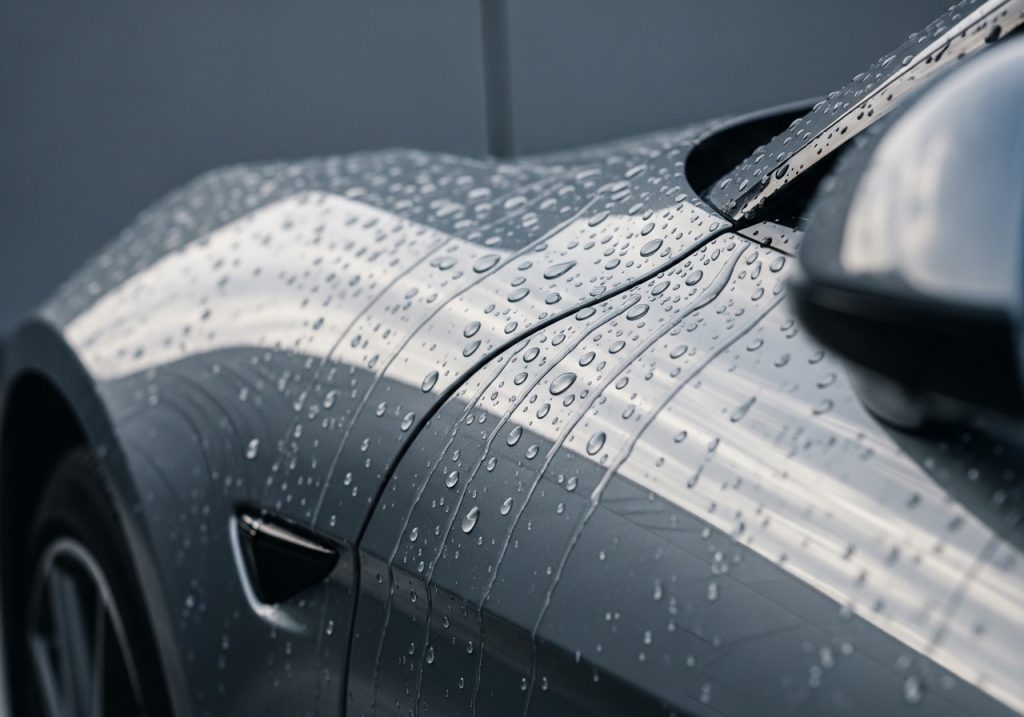
Clearcoat / Topcoat — This is what you touch and see. A high-quality topcoat provides hydrophobic (water-repelling) properties, stain resistance, self-healing capability, and the surface gloss or matte finish. This layer is where brand differentiation often starts.
TPU Core Layer — The structural layer. Its thickness (measured in mils — one mil equals one-thousandth of an inch) determines how much impact the film can absorb. Thickness typically ranges from 6 mil to 12 mil depending on the product. The composition of the TPU — specifically whether it uses single-polymer or a blended co-polymer formula — determines the film’s elasticity, self-healing speed, and conformability to curved surfaces.
Adhesive Layer — The bonding agent between the film and the paint. A good adhesive must hold firmly under heat, cold, and moisture without leaving residue when removed, and without damaging the paint underneath.
Self-Healing: How It Actually Works
Self-healing is one of the most discussed features of premium PPF — and also one of the most misunderstood. The self-healing layer in modern PPF films consists of a polymer network that has memory — meaning it naturally wants to return to its original flat, smooth state. When the surface is scratched by light abrasion (fingernails, car wash brushes, light swirl marks), the polymer chains reactivate under heat — either from direct sunlight, warm water, or a heat gun — and literally flow back into their original position, erasing the scratch.
It is important to note that self-healing works on light surface scratches only. Deep cuts, stone chips, and heavy abrasion will not self-heal — they are absorbed by the film to protect the paint underneath, but the film itself will show the damage.
Brand Profiles: Know Who You Are Buying From
Before comparing specifications, it is worth understanding the corporate identity and history of each brand. The company behind the product tells you a great deal about quality control, warranty reliability, and long-term support.
3M — The Company That Invented the Category
3M, formally known as Minnesota Mining and Manufacturing Company, was founded in 1902 in Two Harbors, Minnesota, USA. It is one of the world’s largest and most diversified industrial companies, with operations spanning adhesives, abrasives, healthcare, electronics, and automotive products across more than 70 countries.
3M holds the original patent to Paint Protection Film. Having invented the category for military helicopter blades during the Vietnam War, 3M transferred the technology to the automotive sector and has been producing PPF under its Scotchgard™ brand since the category went mainstream. This means 3M has more years of PPF manufacturing experience than any other company on earth.
3M’s automotive PPF is developed by the same division that produces OEM-approved adhesive films for vehicle manufacturers. Their products undergo rigorous testing to meet automotive-grade standards for UV resistance, adhesive performance, and long-term durability. Their massive global distribution network means 3M Scotchgard PPF is available through certified installers in virtually every country in the world.
For buyers who place heritage, OEM trust, and brand ubiquity above everything else, 3M remains the founding name in the industry.
XPEL — The Specialist Brand That Raised the Bar
XPEL was founded in the late 1990s in San Antonio, Texas, USA. Unlike 3M, XPEL is not a diversified industrial conglomerate — it is a company built entirely around vehicle protection, with Paint Protection Film and window film as its core business.
This focused identity has driven XPEL to push PPF technology further than any brand that treats it as one product among many. XPEL is widely credited with popularising modern self-healing PPF technology and making it commercially accessible to the mainstream market. The brand’s DAP (Design Access Program) — a digital pattern-cutting software platform with thousands of vehicle-specific templates — also revolutionised installation precision and speed, becoming a model that other brands have since followed.
XPEL’s products are particularly popular in the luxury and performance car segment. Walk into a high-end detailing studio that works on Porsche, Ferrari, McLaren, or Lamborghini, and there is a very strong chance XPEL Ultimate Plus or XPEL Stealth is being applied.
For buyers seeking a dedicated PPF brand with class-leading self-healing performance and strong market presence in the luxury vehicle segment, XPEL is the benchmark against which most competitors measure themselves.
FlexiShield — The Engineering-Driven Brand Building a Global Footprint
FlexiShield is manufactured by Reflek Technologies Corporation. The parent company was founded in Los Angeles in 2012 and is currently headquartered in Chandler, Arizona, USA. The FlexiShield brand trademark was established in 2014, representing Reflek’s dedicated push into the automotive PPF market.
What distinguishes Reflek from most other PPF companies is complete vertical integration. From resin formulation and TPU compounding to film coating, topcoat application, and quality testing — every step of FlexiShield’s manufacturing process is controlled in-house. There is no outsourced manufacturing and no third-party film sourcing. This end-to-end control over the production process is a significant quality advantage that few PPF brands can match.
In early 2026, Reflek Technologies made its most significant manufacturing investment to date by inaugurating a new Color PPF manufacturing facility in Suzhou, China — covering 120,000 square feet, making it the largest Color PPF manufacturing facility in the world. This investment signals the brand’s serious long-term commitment to meeting global demand for colour-changing protective films.
FlexiShield is currently trusted by installers and drivers across the USA, UK, and more than 30 countries worldwide, with authorised distributors operating across Europe, the Middle East, South Asia, and Southeast Asia. In Pakistan, the brand is exclusively distributed by Optimum Premium Detailing in Karachi.
Head-to-Head Technical Comparison
Now that you know who each brand is, it is time to compare what they actually produce.
| Feature | FlexiShield | XPEL | 3M |
| Country of Origin | USA (Chandler, AZ) | USA (San Antonio, TX) | USA (Minnesota) |
| Parent Company | Reflek Technologies Corp. | XPEL Inc. | 3M Company |
| Film Technology | TPU, hard/soft co-polymer blend | TPU, Edge Seal Technology | TPU, elastomeric polymers |
| Thickness Range | 7.5 mil – 10.0 mil | 6 mil – 8 mil | 7.9 mil – 12 mil |
| Self-Healing | Yes (heat-activated) | Yes (heat-activated) | Yes (heat-activated) |
| Hydrophobic Topcoat | Yes | Yes (Fusion: ceramic-infused) | Yes (Pro Series 200) |
| Matte Finish Option | Yes (MAT Series) | Yes (Stealth) | Yes (Pro Series 200 Matte) |
| Colour PPF | Yes (30+ colours, Series 2) | Yes | Limited |
| Windshield Film | Yes (DFR) | Yes | Yes |
| Headlight Film | Yes (HDL) | Yes | Yes |
| Window Film | Yes (GT & CH) | Yes | Yes |
| Warranty | 10–12 years | 10 years | 5–10 years (varies by series) |
| Installation Method | Dry-apply (patented) | Wet and dry apply | Wet and dry apply |
| Pattern Software | RAP (Reflek Application Patterns) | DAP (Design Access Program) | 3M Pattern Marketplace |
| Global Presence | 30+ countries | Global | 70+ countries |
Product Line Deep Dives
Understanding the full product range of each brand helps you match the right film to the right vehicle and use case.
FlexiShield Product Lines
FlexiShield offers one of the most comprehensive product ecosystems in the PPF industry — covering clear protection, matte finishes, colour transformation, windshield, headlight, and window applications all under a single brand.
Clear PPF Range
WSH Pro (8.5 mil) — The flagship of the FlexiShield clear PPF lineup. At 8.5 mil thickness, WSH Pro is among the thickest standard clear PPF films on the market. Its hyper-glossy surface delivers a mirror-smooth finish that enhances paint depth and clarity while providing maximum protection. It carries the brand’s longest warranty — 10 to 12 years depending on the installation.
WSH (8.0 mil) — The workhorse of the range. The WSH is engineered to deliver optimum self-healing performance, durability, and versatility for high-value cars, yachts, architectural interiors, and a wide range of personal and commercial assets. What gives this film particular credibility is its track record — it has been field-tested across extreme climates for a decade, from the scorching heat of the Arizona desert to the frozen fjords of Norway, delivering consistent performance in both environments.
DPH (10.0 mil) — The most serious film in the lineup. At 10.0 mil, this is the thickest film FlexiShield produces, and it is built for the toughest conditions — from gravel roads to track days. Engineered specifically to safeguard supercars and high-performance vehicles operating in environments where conventional PPF would be overwhelmed, the DPH represents the absolute upper limit of physical paint protection available in film form.
STH — A reliable standard-grade protection film for everyday vehicles. Solid warranty, dependable self-healing performance, and a straightforward installation profile make this an excellent choice for commuter cars and family vehicles.
BHP — Targeted protection designed for high-impact zones: front bumpers, lower door panels, and rocker panels that take the brunt of road debris and parking lot damage.
MAT — A matte-finish clear PPF that protects factory or aftermarket matte paint while preserving the flat, non-reflective aesthetic. Vehicles with matte paint require film specifically designed for that finish — conventional gloss PPF changes the appearance entirely.
Colour PPF — Series 2
FlexiShield’s Series 2 Colour PPF represents the next generation of colour-changing paint protection. Unlike vinyl wraps that simply change colour, Colour PPF integrates automotive-grade pigments throughout the full TPU film structure while maintaining all the protection properties of standard PPF — self-healing, hydrophobic topcoat, UV resistance, and stone chip protection. This means car owners get a colour transformation and full paint protection simultaneously, without having to choose between aesthetics and function. Series 2 is available in more than 30 colour options and is the product category for which FlexiShield built the world’s largest dedicated manufacturing facility in Suzhou.
Specialty Films
DFR (Windshield Protection Film) — Uses optically transparent and highly durable polyethylene terephthalate (PET) as an effective protective barrier against high-speed impacts on the windshield. At motorway speeds, a stone chip hitting unprotected glass can crack the windshield instantly. The DFR absorbs that impact before it reaches the glass, potentially saving thousands in windshield replacement costs.
HDL (Headlight Protection Film) — Provides UV protection and stone chip resistance for headlights. Modern LED and xenon headlights are expensive to replace and are particularly vulnerable to UV hazing and surface crazing over time. The HDL preserves optical clarity while protecting the headlight surface from physical and UV damage.
GT and CH (Window Films) — IR heat rejection nano-ceramic carbon window tints that reduce interior thermal load, block UV radiation, and improve passenger comfort. Particularly valuable in hot climates like the Middle East and South Asia.
XPEL Product Lines
XPEL Ultimate Plus
The flagship product and arguably the most well-known PPF film in the premium market. Ultimate Plus is renowned for its optical clarity, strong self-healing performance, and overall durability. It is the film that established XPEL’s reputation in the luxury car space and remains the brand’s benchmark product. Ultimate Plus carries a 10-year manufacturer warranty.
XPEL Stealth
XPEL’s matte-finish PPF designed for vehicles with factory matte paint or for owners wanting to convert a gloss finish to a satin/matte appearance. Stealth maintains the flat, non-reflective aesthetic of matte paint while offering full PPF protection underneath.
XPEL Fusion Plus
One of the more innovative products in the XPEL lineup, Fusion Plus combines a self-healing PPF film with a built-in ceramic coating layer — essentially providing two levels of protection in a single product. The integrated ceramic topcoat adds an extra layer of hardness, enhanced hydrophobicity, and improved chemical resistance on top of the standard PPF protection. For car owners who want maximum protection with a single installation, Fusion Plus is a compelling option.
XPEL Colour PPF
XPEL offers a range of colour-change PPF films that allow car owners to change their vehicle’s appearance while maintaining the protection benefits of standard PPF.
Edge Seal Technology
A notable XPEL-specific installation innovation. Edge Seal technology bonds the edges of the PPF film more securely to the vehicle’s surface, reducing the risk of lifting at panel edges — one of the most common failure points in PPF over time.
3M Scotchgard Product Lines
Scotchgard Pro Series
3M’s primary clear PPF product for professional installation. The Pro Series is built on 3M’s proprietary clear coat technology, which provides strong stain, weather, and abrasion resistance. It is tested to OEM automotive standards and is used by dealerships and independent installers alike. The Pro Series carries a 10-year warranty and is 3M’s most widely installed film globally.
Scotchgard Pro Series 200
The newer generation of 3M’s professional PPF lineup. The Pro Series 200 introduces an optimised adhesive formulation designed specifically to be installer-friendly — allowing better repositioning during application and minimising lift lines and adhesive marks that can appear after installation. It is also available in a wider 72-inch width option, which allows installers to achieve seamless coverage on larger panel areas without seams.
Pro Series 200 Matte
The matte-finish version of the Pro Series 200, designed for vehicles with factory matte paint or for gloss-to-matte aesthetic conversions.
SGH6 and SGH12
3M’s heavy-duty protection options at 8 mil and 12 mil respectively. SGH12 is particularly notable for being one of the thickest films in 3M’s range — suitable for vehicles in extremely high-debris environments or commercial and fleet applications where maximum physical protection is the priority.
Warranty Comparison: What Is Actually Covered
A warranty on PPF is only valuable if you understand what it covers, what it excludes, and what conditions you must meet to keep it valid.
FlexiShield Warranty
FlexiShield offers a 10-year manufacturer warranty on its standard product lines, with WSH Pro carrying up to 12 years depending on the installation and market. The warranty is backed directly by Reflek Technologies Corporation and covers manufacturing defects including yellowing, delamination, bubbling, cracking, and self-healing failure under normal use conditions. It requires installation by a certified FlexiShield authorised installer and adherence to the manufacturer’s maintenance guidelines.
XPEL Warranty
XPEL warrants its Ultimate Plus, Stealth, and Colour PPF lines for ten years from the date of purchase. Covered defects include yellowing, staining, cracking, blistering, and delamination. The warranty is administered by XPEL directly and requires the film to have been installed by an XPEL-authorised installer. One important detail: the XPEL warranty is non-transferable, meaning it does not carry over to a new owner if the vehicle is sold.
3M Warranty
3M’s warranty structure varies by product tier. The Scotchgard Pro Series carries a 10-year warranty — 3M’s highest — while lower-tier products come with either 5-year or 7-year coverage. All warranties cover manufacturing defects including yellowing, bubbling, and cracking, and require installation by a 3M-authorised installer. 3M also offers warranty registration that can appear on a Carfax vehicle history report in some markets — a small but meaningful advantage for resale value.
What Voids a Warranty Across All Brands
Regardless of which brand you choose, the following actions will void your PPF warranty:
Installation by a non-certified or unauthorised shop is the most common cause of warranty invalidation across all three brands. Using automatic car washes with rotating brushes can lift film edges over time and is prohibited by all manufacturers. Applying abrasive polishes or compounds directly to the film surface degrades the topcoat. Ignoring the cure period — typically 7 to 14 days post-installation during which the adhesive fully bonds — and washing the car too early can also compromise adhesion. Physical damage from road impacts is covered by the film’s performance, not the warranty — the warranty covers manufacturing and material defects, not wear and tear.
The key takeaway on warranties is this: the brand matters, but the installer matters more. A 10-year warranty is only valuable if the film is installed correctly by a certified professional using genuine product.
Installation: What Every Car Owner Should Know
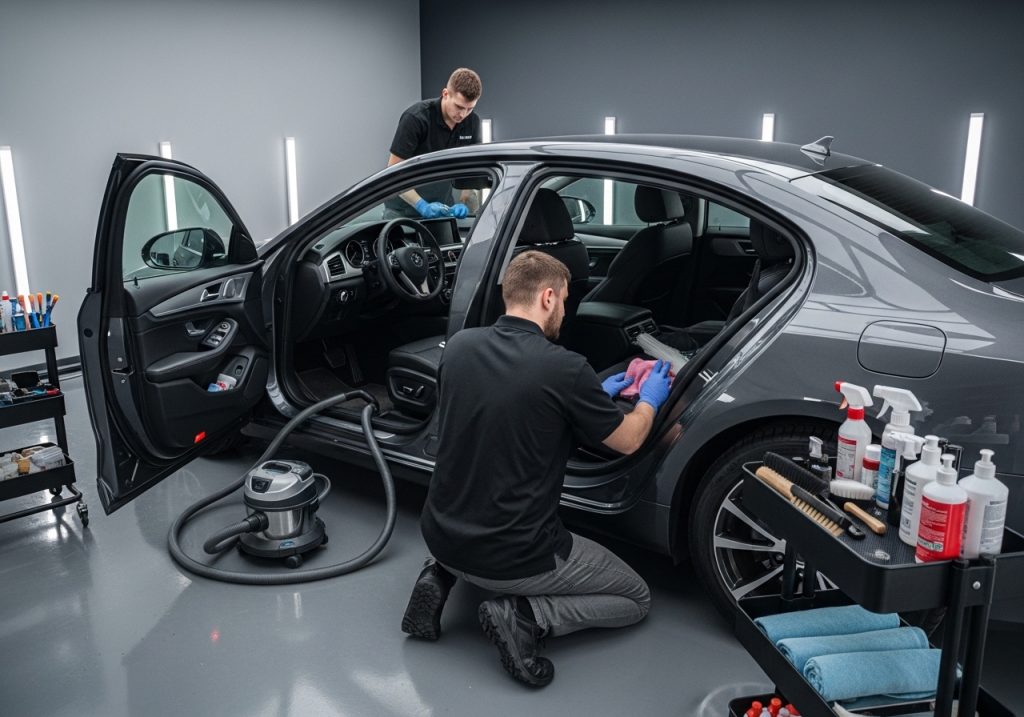
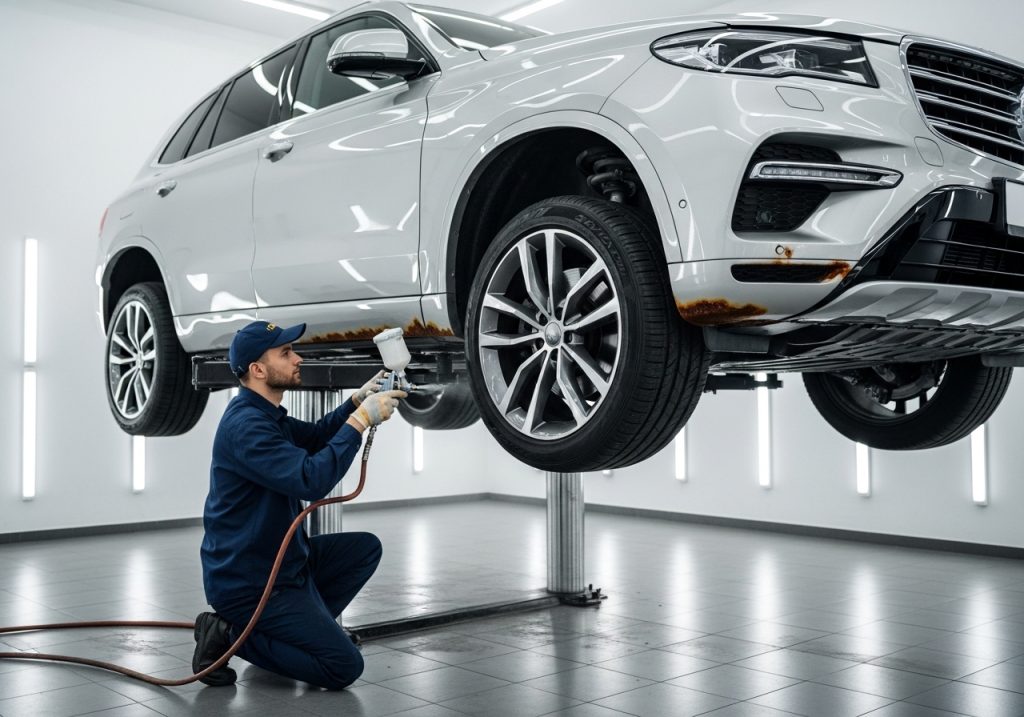
PPF is not a product you buy online and apply yourself. Modern PPF films require precision cutting, surface preparation, alignment, and heat-forming around complex curves and edges. Done incorrectly, even the best film in the world will lift, silver at the edges, trap contamination beneath it, or develop moisture pockets that ruin the finish within months.
All three brands — FlexiShield, XPEL, and 3M — require professionally certified installers to validate warranties and ensure quality outcomes.
FlexiShield: Dry-Apply Technology
FlexiShield uses a patented dry-apply installation method. Unlike traditional wet-apply installation that uses slip solutions (soapy water) to position the film, dry-apply relies on the film’s own elasticity and the installer’s technique. This approach reduces the risk of contamination beneath the film, speeds up installation time, and produces cleaner edge finishes with less visible residue.
The film’s high elasticity and extensibility — rated at 250% — means it can be stretched, formed around tight curves, and repositioned without tearing or distorting, giving even less experienced installers the ability to achieve professional-quality results. Pattern software (RAP library) provides pre-cut vehicle-specific templates for thousands of models, reducing material waste and installation time.
XPEL: DAP Pattern System
XPEL’s Design Access Program (DAP) is a cloud-based digital pattern library with thousands of vehicle-specific pre-cut patterns. Installers upload the vehicle model, select the coverage area, and the software produces precision-cut templates that minimise seams and maximise coverage accuracy. Edge Seal technology, applied during installation, bonds film edges more securely and reduces the risk of lifting over time.
3M: Pattern Marketplace
3M operates Pattern Marketplace — a cloud-based pattern system with nearly 4,500 quality-tested patterns going back more than ten model years. The system offers flexible purchase options for installers and includes key pattern editing features. The Pro Series 200’s improved adhesive formulation is specifically designed to reduce the frustration of repositioning during installation, making it one of the more installer-friendly products in the 3M range.
Pre-Installation Steps That Affect Long-Term Results
Regardless of which brand is being installed, the preparation process before the film goes on is just as important as the film itself. A professional studio should always perform a thorough wash and chemical decontamination of the paint surface, a clay bar treatment to remove embedded contaminants, and paint correction to address any existing swirl marks, scratches, or surface defects. PPF locks in whatever condition the paint is in at the time of installation — any defects left unaddressed will be visible and preserved permanently under the film.
Optimum Premium Detailing in Karachi follows this exact preparation protocol for every FlexiShield installation — including certified 3D USA paint correction before any film is applied.
Post-Installation Care
For all three brands, the first seven to fourteen days after installation are the cure period. During this time, the adhesive fully bonds to the paint surface. Avoid washing the car during this period, and never use a pressure washer directed at film edges. Once cured, wash with pH-neutral automotive shampoo, avoid abrasive products on the film surface, and have the vehicle inspected annually at the installing studio to catch any edge lifting early.
Pricing: What to Expect Globally
PPF pricing varies significantly by region, vehicle size, film brand, coverage area, and installer skill level. The figures below represent general global benchmarks for full-vehicle professional installations.
General Price Context
3M Scotchgard installations are typically positioned at the lower to mid range of the three brands compared here. The wide availability of 3M and the presence of installers at various skill and price levels creates broad market access. For comparable coverage, 3M can be 10 to 15 percent less expensive than XPEL in many markets.
XPEL commands a premium price globally, particularly for Ultimate Plus full-vehicle installs on luxury and performance cars. In developed markets like the USA, UK, Germany, and the Middle East, full-vehicle XPEL installs on performance cars can range from approximately $2,000 USD for compact vehicles up to $8,000 USD or more for supercars or large SUVs, depending on film selection and market.
FlexiShield is positioned as premium-quality at competitive pricing. In markets where FlexiShield has an official authorised distributor — including the USA, UK, Europe, and Pakistan — it offers American-engineered performance with a value proposition that makes it particularly accessible compared to XPEL’s pricing while maintaining full 10-year manufacturer warranty coverage.
In Pakistan specifically, FlexiShield is distributed exclusively by Optimum Premium Detailing in Karachi. This means Pakistani car owners have direct access to genuine, warranty-backed FlexiShield product — including the full range from WSH to DPH and Colour PPF — installed by a certified team, without the grey-market pricing or authenticity risks that come with non-official channels.
The Hidden Cost of Cheap PPF
A word of caution for any buyer tempted by significantly cheaper alternatives: unbranded or low-quality PPF films are prevalent in many markets, often sold at a fraction of the price of genuine branded product. These films frequently yellow within one to two years, lift at the edges, lose self-healing capability, and in some cases damage paint upon removal. The cost of removing failed PPF, correcting any paint damage, and reinstalling quality film far exceeds the initial saving. Choose quality once, and the film will protect your car for a decade. Choose price alone, and you will pay for it twice.
Brand Positioning: Which Brand Is Best for Whom?
All three brands produce world-class PPF. The right choice depends on your priorities, your market, and what you are protecting.
Choose 3M If:
You are a buyer who places the highest value on brand legacy, OEM-level institutional trust, and the widest possible geographic availability. 3M’s Scotchgard Pro Series is a proven, reliable product backed by the company that invented the category. It is an excellent choice for dealerships, fleet operators, and buyers in markets where 3M has deep-rooted installer infrastructure. For buyers who want a reliable 10-year product from a name they already know and trust for dozens of other products, 3M is a solid and defensible choice.
Choose XPEL If:
You own a luxury or performance car and want the film that the world’s leading supercar detailing studios recommend. XPEL’s Ultimate Plus is the benchmark in high-end PPF for a reason — its self-healing performance and optical clarity are industry-leading. If you want PPF and ceramic protection in a single product, XPEL Fusion Plus is the only offering from these three brands that delivers both in one installation. XPEL is also the strongest choice in markets where it has built a deep and well-established certified installer network.
Choose FlexiShield If:
You want the broadest product ecosystem from a single brand — covering everything from clear gloss protection to matte, colour PPF, windshield, headlight, and window film under one warranty and one manufacturer relationship. FlexiShield’s DPH at 10.0 mil offers the thickest standard film in this comparison, making it the choice for supercar and off-road vehicle owners who need maximum physical protection. For buyers in regions where FlexiShield has an authorised distributor — including the USA, UK, Europe, Middle East, and Pakistan — the brand offers American-engineered quality at a competitive price point with full international warranty backing. For installers, the dry-apply technology and strong training support make it a professional-first brand that rewards skill and expertise.
Common Mistakes When Choosing and Installing PPF
Even car owners who do their research make avoidable mistakes. Here are the most common ones to watch for.
Choosing based on price alone. PPF is a long-term investment in your car’s paint. The cheapest film available is almost always a false economy. A quality brand installed correctly will cost more upfront and save you significantly more over a decade.
Using a non-certified installer. This is the single biggest mistake you can make. Every major brand — FlexiShield, XPEL, and 3M — requires certified installation to validate the warranty. A non-certified installer may be skilled, but you will have no manufacturer warranty to fall back on if the film fails.
Skipping paint correction before installation. PPF locks in whatever condition the paint is in at the moment it goes on. Swirl marks, fine scratches, and surface oxidation will be sealed beneath the film and visible for the life of the installation. Always invest in paint correction before PPF.
Confusing PPF with ceramic coating. They are complementary products, not substitutes. If a shop offers you only ceramic coating as a replacement for PPF, they are either misinformed or selling you a less expensive service for a premium price. Use both together for complete protection.
Not verifying product authenticity. Counterfeit and grey-market PPF is a real problem in many markets. Always ask for product documentation, installation certificates, and warranty paperwork. Buy only from authorised distributors.
Ignoring post-installation care. The cure period is real. Washing your car too soon, using the wrong products, or directing high-pressure water at film edges in the first two weeks can compromise the installation permanently.
Final Verdict: FlexiShield vs XPEL vs 3M
There is no single answer to which brand is universally best. The honest verdict is more nuanced than that — and more useful.
3M wins in heritage, institutional credibility, and global distribution scale. It is the brand that invented the category and the choice that carries the most universal name recognition in markets around the world.
XPEL wins in self-healing technology leadership, luxury market positioning, and the niche of combined PPF-plus-ceramic coverage with its Fusion Plus product. For premium car owners in markets with strong XPEL installer networks, it remains the most aspirational brand in the segment.
FlexiShield wins in product range depth, maximum thickness options, installer-friendly technology, and value accessibility in markets where it has authorised distribution. Its vertical manufacturing model, decade of field-tested performance, and the world’s largest Colour PPF production facility position it as the most forward-looking brand of the three. For car owners in Pakistan, the UK, the Middle East, and other active FlexiShield markets, it represents the strongest combination of quality, warranty confidence, and value available today.
The real non-negotiable across all three brands is this: the outcome of your PPF installation depends more on the quality of the installer and the authenticity of the product than on any brand name alone. A perfectly installed FlexiShield, XPEL, or 3M film will protect your car for a decade and look flawless throughout. An improperly installed film from any brand will fail within months.
Choose a certified installer. Choose genuine product. And choose the brand whose product range and warranty best match your vehicle, your environment, and your expectations.