Karachi is a coastal city. That means the air carries salt and moisture almost every single day. For car owners, this is a serious problem. Salt in the air attacks metal parts on your car without you even noticing. By the time rust becomes visible, the damage underneath is often already deep. Understanding why this happens and what you can do about it can save you a lot of money in the long run.
How Salt Air Damages Your Car
Salt is one of the fastest ways to destroy metal. When salty air and moisture combine, they speed up a process called oxidation. Oxidation is what causes rust to form on iron and steel. Your car’s underbody is made mostly of metal. It faces the road directly, which means it gets hit by everything including water, dirt, and salt particles in the air.
In Karachi, the problem is constant. Unlike cities that are far from the sea, Karachi’s humidity carries salt even when it is not raining. Every time you drive near the beach or through low-lying areas, your car’s underbody is soaking in that salty air. Over weeks and months, this eats through paint and metal layers quietly.
Why the Underbody Is the Most Vulnerable Part
Most car owners focus on the paint, the seats, and the engine. Very few think about what is underneath the car. The underbody includes the chassis, exhaust pipes, suspension parts, brake lines, and fuel lines. These parts are constantly exposed to the road surface. They collect water, mud, and debris on every single drive.
The undercoating that cars come with from the factory is usually thin. It is designed for average road conditions, not for a coastal environment like Karachi. Over time, this factory coating chips away from road debris and speed bumps. Once the metal is exposed, the salt air does its damage fast.
Signs That Rust Is Already Forming
Rust does not always show itself right away. There are some signs you can look for if you suspect your car’s underbody is being affected. One sign is a faint smell of rust or metal when you are inside the car. Another sign is unusual sounds from the suspension or exhaust that were not there before. Visible orange or brown patches under the car are a clear warning that rust has already started.
If you notice that your car’s floor feels soft in any spot or you see small holes forming near the wheel arches, that is a serious sign. At that point, the rust has already moved from the surface into the structure of the car. Catching it early makes treatment much easier and cheaper.
What Anti Rust Coating Actually Does
Anti rust coating is a protective layer applied to the underbody of your car. It acts as a barrier between the metal and the outside environment. A good coating seals out moisture, blocks salt particles, and absorbs small impacts from road debris without cracking.
There are different types of anti rust coatings available in Karachi. Rubberized undercoating is one of the most common. It sprays on as a thick liquid and dries into a rubbery layer that sticks tightly to the metal. It is flexible, so it does not crack when the car flexes over bumps. Bitumen-based coating is another option. It is darker and heavier but works well as a basic moisture barrier.
Some shops also offer heat-resistant coatings for parts near the exhaust. This is important because heat and rust work together to weaken exhaust pipes faster than any other part of the underbody.
How the Coating Is Applied
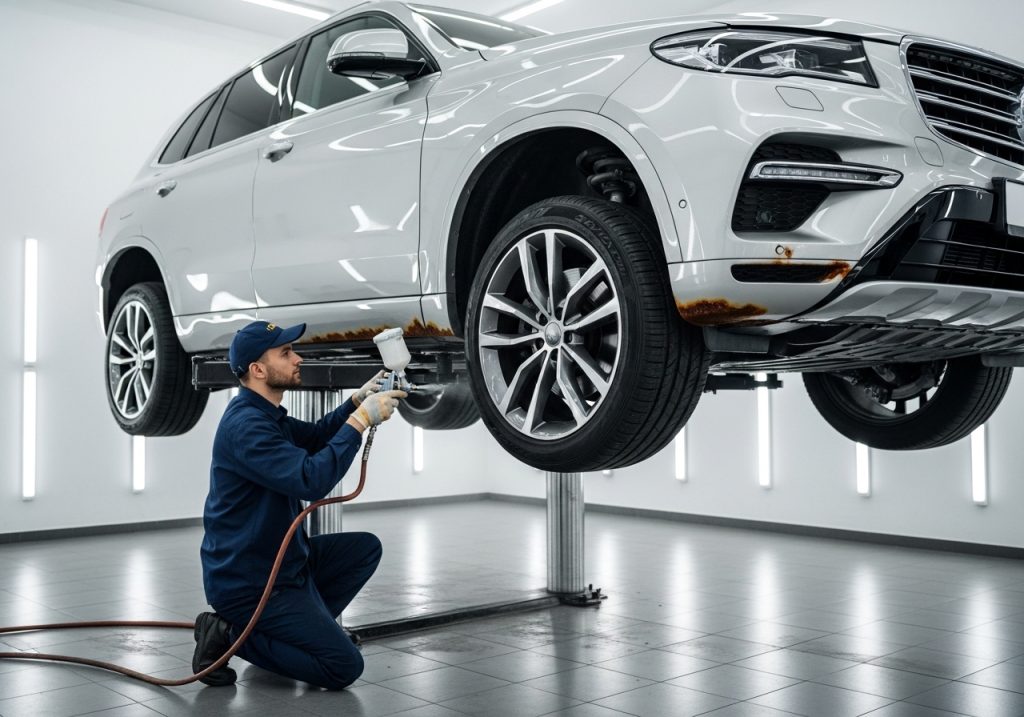
A proper anti rust coating job starts with cleaning the underbody completely. Old dirt, grease, and loose rust must be removed before any coating is applied. If a shop skips this step, the coating will not bond properly to the metal and will peel off within a few months.
After cleaning, the underbody is dried thoroughly. Any surface rust that is present is treated with a rust converter before the coating goes on. A rust converter chemically changes existing rust into a stable compound that no longer spreads. Then the coating is sprayed or brushed on in even layers. Most good shops apply two to three layers for proper protection.
The car is then left to dry and cure before driving. The whole process can take several hours depending on the size of the vehicle and the condition of the underbody.
How Often Should You Get It Done in Karachi
For a city like Karachi, getting an anti rust coating every one to two years is a wise choice. If you frequently drive near the sea in areas like Clifton, Seaview, or the coastal highway, doing it annually makes even more sense. Vehicles that are older or that have already shown early signs of rust may need treatment sooner.
It is also a good idea to get the underbody inspected every time you go for a major service. A mechanic can spot early rust patches and damaged coating before they become big problems. Prevention is always cheaper than repair.
Choosing the Right Shop in Karachi
Not every shop in Karachi that offers anti rust coating does a thorough job. Some apply a thin layer quickly without proper surface preparation. The coating may look fine at first but will fail within months. Look for shops that lift the car fully on a ramp so the entire underbody can be accessed and treated properly.
Ask the shop what brand of coating they use and how many layers they apply. A trustworthy shop will have clear answers. Avoid any place that rushes the job or offers prices that seem too low to be real. Quality underbody protection costs a fair amount because the materials and labor both take time.
Final Thoughts
Karachi’s coastal environment is genuinely hard on vehicles. The combination of salt air, humidity, and rough roads creates conditions that rust through an unprotected underbody faster than most car owners realize. Anti rust coating is not a luxury. For anyone driving regularly in Karachi, it is one of the most practical things you can do to extend the life of your car and avoid expensive repairs down the road.