There’s a familiar frustration every car owner in Karachi knows too well. You get your car washed on a Saturday morning, and by Monday it looks like it hasn’t been touched in weeks. Dust settles in every crease, the sun has bleached the colour just a little more, and that showroom shine feels like a distant memory.
It’s not just about how often you wash. The real problem is that bare paint — no matter how new — is porous, vulnerable, and constantly under attack. UV radiation, bird droppings, tree sap, industrial fallout, and the gritty dust that blankets Karachi create a slow but relentless assault on your car’s finish.
Ceramic coating is one of the most effective answers to this problem. But there’s a lot of noise online about what it does and doesn’t do. This blog cuts through the marketing language and tells you exactly what changes after your car gets ceramic coated — the real results, the real limits, and what to expect month after month.
Instant Changes You’ll Notice After Ceramic Coating
The first thing you’ll see is gloss — and not the kind you get from a good wax job. Ceramic coating creates a hard, glass-like layer over your paint that reflects light with extraordinary depth and clarity. It’s often described as a mirror-like or “wet look” shine, and that description is accurate.
The surface becomes noticeably smoother to the touch. Run your hand across a coated panel and you’ll feel the difference immediately — it feels slick, almost frictionless. That smoothness isn’t just aesthetic. It means dust, pollen, and fine particles have fewer microscopic pores and ridges to cling onto.
Colour enhancement is another immediate result. Darker colours — blacks, deep blues, and charcoals — appear richer and more saturated. Lighter colours gain a brilliance and clarity they didn’t have before. This is one of the most satisfying moments for any car owner: seeing your paint look better after coating than it did the day you drove it out of the showroom.
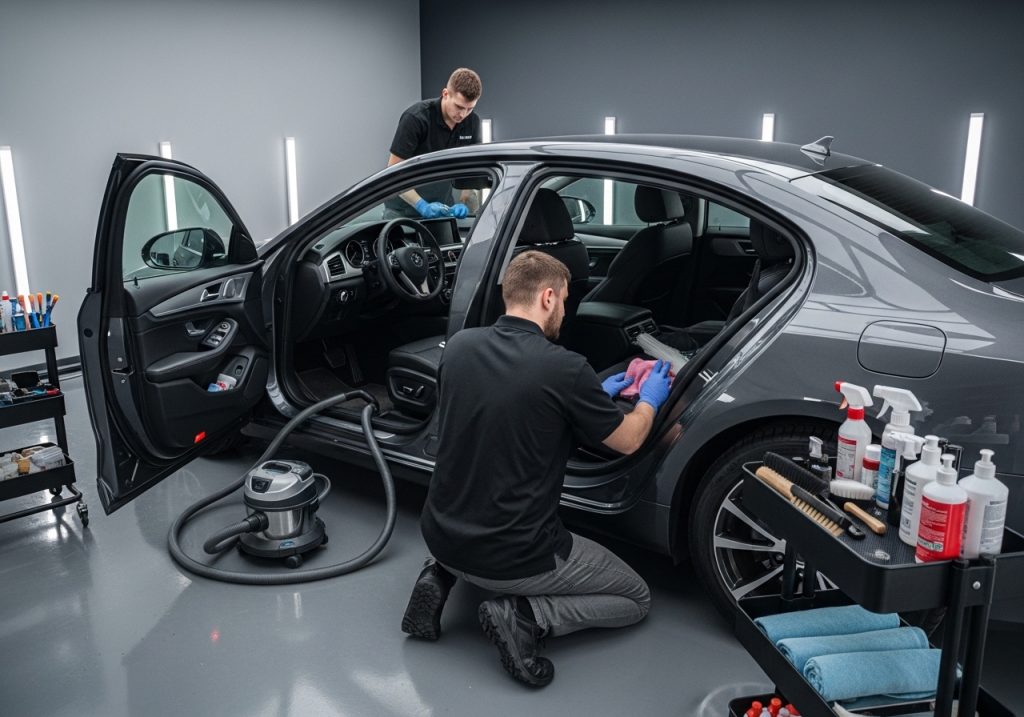
At Optimum Detailing, this stage is only possible because of the work done before the coating goes on. Their team uses professional products from 3D Car Care and 3M for paint correction, decontamination, and surface preparation. This matters enormously. Ceramic coating bonds to whatever surface it’s applied to — which means if there are swirl marks, water spots, or contamination underneath, the coating locks them in permanently. A properly prepped surface is what makes the coating look exceptional, not just adequate.
The Hydrophobic Effect – Why Water Slides Off
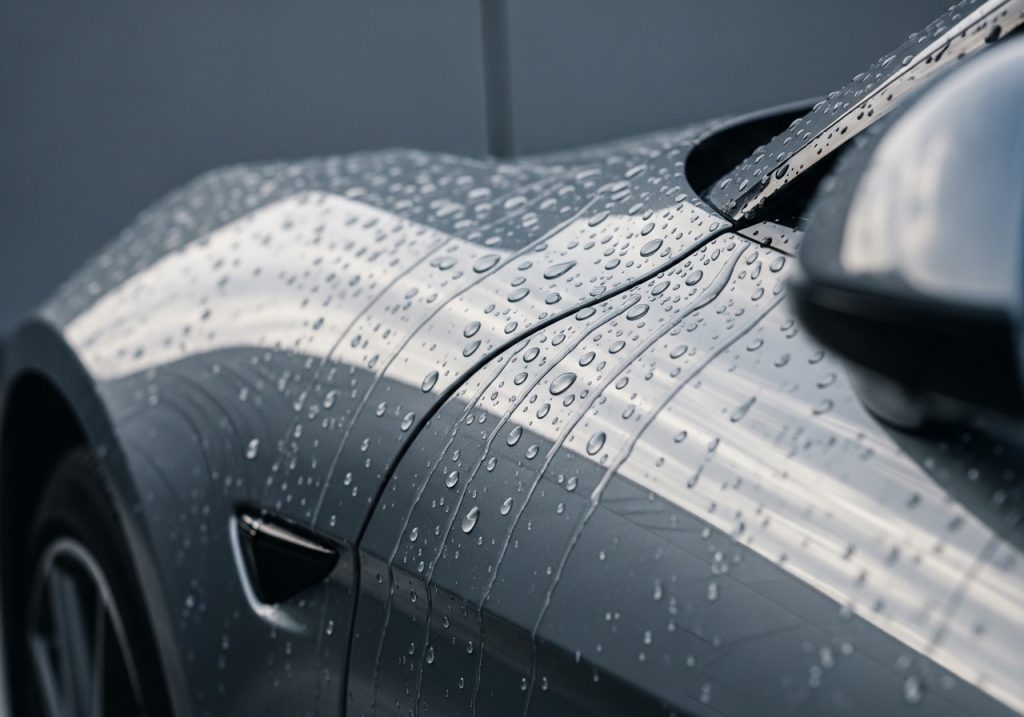
One of the most visually striking things about a fresh ceramic coating is how water behaves on it. Instead of spreading flat and sitting on the surface, water balls up into tight beads and rolls off — carrying dust and light dirt with it.
This is called the hydrophobic effect, and it’s built into the molecular structure of the ceramic layer. Water simply cannot bond to the surface the way it does with unprotected paint.
What this means practically:
- After rain, your car dries faster and with fewer water spots
- During a wash, dirt and grime release far more easily
- You spend less time scrubbing, and less physical contact with the paint means fewer chances to introduce new swirl marks
- Between washes, the car stays cleaner for longer because surface contamination doesn’t get the grip it normally would
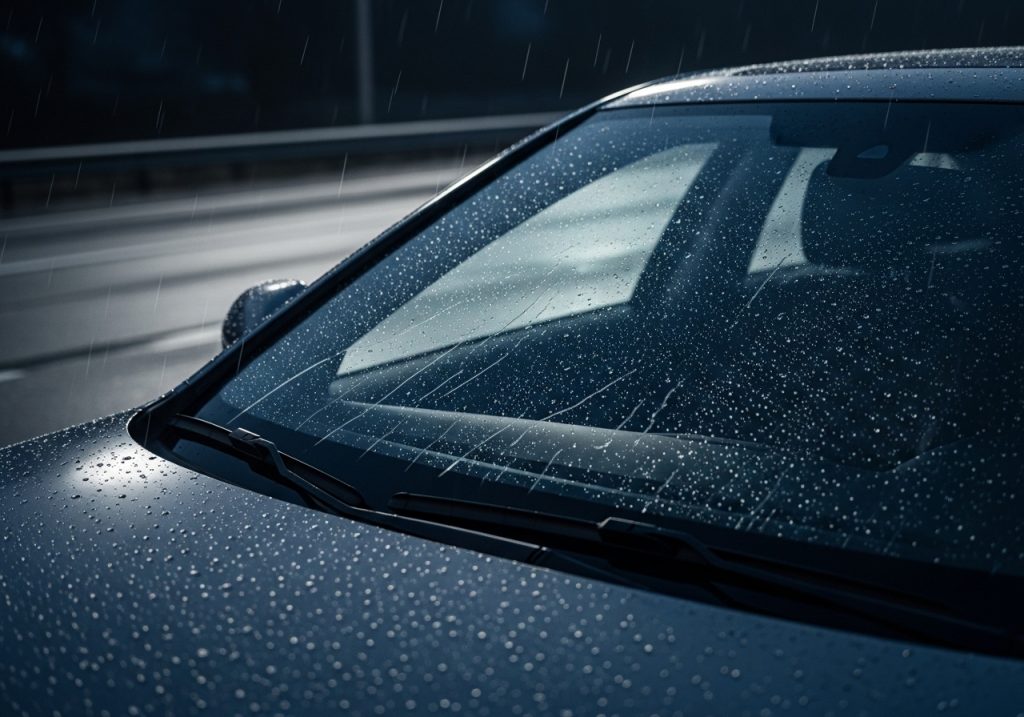
In Karachi’s dusty environment, this is one of the most immediately useful benefits. Dust that lands on a coated car sits loosely on the surface rather than embedding into the paint. A gentle rinse does far more work than it ever could on bare paint.
Protection Your Car Actually Gets
Beyond appearance, ceramic coating provides a meaningful layer of protection — particularly relevant for Karachi’s climate.
UV Protection: Karachi receives intense sunlight year-round. UV radiation is one of the primary causes of paint oxidation and fading, particularly on red and black vehicles. The ceramic layer acts as a UV barrier, significantly slowing down colour degradation and keeping the paint looking younger for longer.
Chemical Resistance: Bird droppings, tree sap, and industrial fallout are mildly acidic or chemically aggressive. On bare paint, if left for hours or days, they can etch into the clear coat and cause permanent marks. A ceramic coating creates a chemically resistant barrier that gives you more time to clean these contaminants before they cause damage.
Resistance to Light Surface Contamination: Because the surface is so smooth and hard, fine dust and environmental particles sit on top rather than working their way into the paint. This doesn’t mean the car is immune to scratches — but it does mean daily environmental exposure causes less wear over time.
At Optimum Detailing, the coating systems used — TAC System, IGL Coatings, and Gtechniq — are professional-grade products with high concentration formulas. IGL Coatings, for example, incorporates graphene and nano-technology alongside ceramic compounds, offering anti-static properties that actively repel dust rather than just resisting it. Gtechniq is globally recognised for long-term durability and clarity retention. These aren’t off-the-shelf consumer products — they’re the same systems used by detailers serving high-end vehicles worldwide.
What Ceramic Coating Does NOT Do (Important Reality Check)
This section matters. A lot of the disappointment people experience with ceramic coating comes from expectations that were never realistic to begin with.
Ceramic coating is not scratch-proof. It adds hardness to the surface, but it will not stop a key scratch, a shopping cart, a careless brush with a bush, or a stone chip at highway speed. Anyone claiming a ceramic coating will prevent these things is misleading you.
Ceramic coating will not protect against deep impacts. Dents, dings, and stone chips go through the clear coat and into the paint or substrate. A ceramic layer — no matter how thick — cannot absorb those impacts.
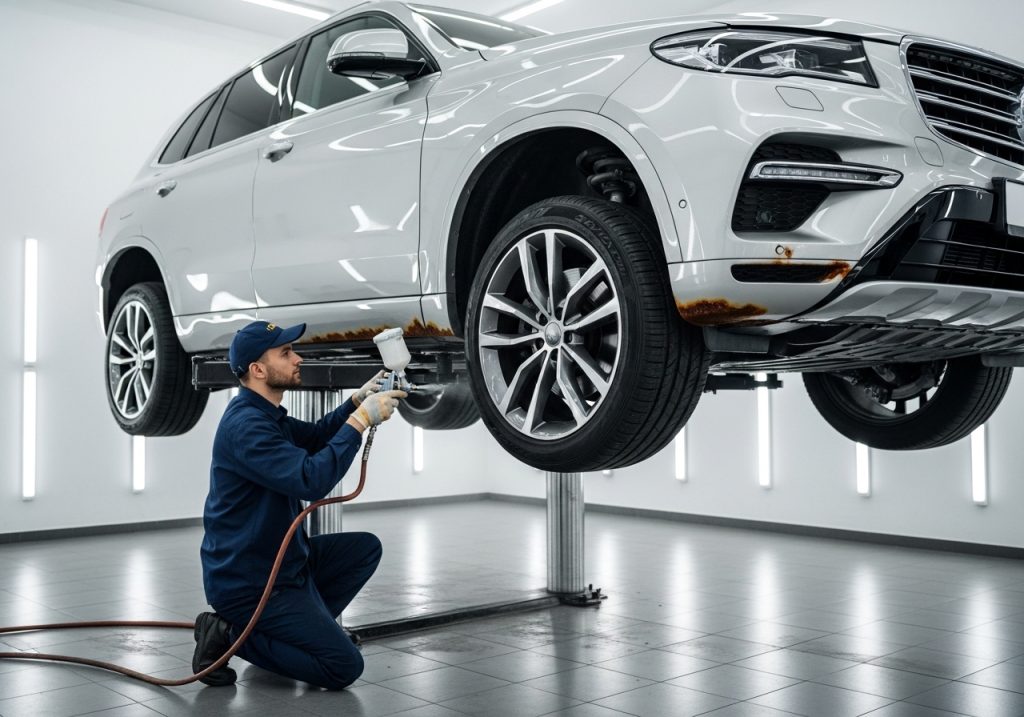
Ceramic coating does not replace Paint Protection Film (PPF). This is perhaps the most important distinction. If you want physical protection against stone chips, scratches, and impact damage, PPF is the product that does that. Ceramic coating and PPF serve different purposes. Many serious car owners use both — PPF on high-impact areas like the bonnet, bumpers, and door edges, and ceramic coating over the top for hydrophobic and UV benefits across the whole car.
Being honest about these limits isn’t a weakness — it’s how you make the right decision for your car.
How Your Maintenance Routine Changes
After ceramic coating, your relationship with car washing changes — mostly for the better.
You won’t need to wash as frequently. The hydrophobic surface sheds light dust and water so efficiently that your car stays presentable for noticeably longer between washes. For daily drivers in Karachi, this can translate to washing every two to three weeks rather than every few days.
When you do wash, the process is easier. Dirt doesn’t bond the way it used to, and rinse water carries far more contamination away before you even pick up a wash mitt. That means less physical contact with the paint, which means fewer swirl marks introduced over time.
However, ceramic coating doesn’t mean zero effort. You still need to wash properly — using a pH-neutral car shampoo, a clean microfibre wash mitt, and the two-bucket method if possible. Harsh alkaline cleaners, dishwashing liquid, and automatic car washes with abrasive brushes will degrade the coating prematurely. The coating makes washing easier, but it rewards good habits and punishes bad ones faster than bare paint would.
How Long the Results Last
Longevity depends on three things: the product used, how the car is maintained, and the driving conditions it’s exposed to.
Professional-grade products like TAC System, IGL Coatings, and Gtechniq are formulated for multi-year performance. Under proper maintenance conditions, you can expect:
- Entry-level professional coatings: 2–3 years
- Mid-range systems: 3–5 years
- Premium layered systems (with correct maintenance): 5+ years
Karachi’s environment — intense heat, UV exposure, sea air near the coast, and heavy dust — is more demanding than moderate climates. A car that lives outside, drives daily, and is washed at a roadside car wash will see the coating wear faster than a garaged vehicle washed properly at home.
This is why product quality matters. A professional-grade coating applied correctly lasts significantly longer than a consumer-grade product applied by someone who skipped the surface prep.
What Happens Over Time (After Months and Years)
Ceramic coating doesn’t fail dramatically. It fades gradually. The first thing to diminish is the hydrophobic effect — water will still bead, but with less energy. Beads become flatter, sheeting becomes less complete. This is the clearest sign that the coating is thinning.
Gloss retention holds longer than hydrophobics in most quality coatings. You might notice the water behaviour declining before the visual appearance changes significantly.
At around the 60–70% mark in a coating’s lifespan, a maintenance top-up can refresh the hydrophobic properties and extend the life of the coating considerably. This is far more economical than a full re-application and makes sense for most car owners.
When the coating finally reaches the end of its effective life, the paint underneath — if properly prepared and maintained — should be in significantly better condition than paint that went unprotected for the same period.
Is Ceramic Coating Worth It in Karachi?
Objectively, yes — and Karachi specifically makes a strong case for it.
The city is genuinely harsh on paint. UV intensity is high year-round. Dust is constant. Salt air near coastal areas accelerates oxidation. The roads are rough enough that stone chips are frequent. And the default car washing culture — roadside manual washes with often dirty water and abrasive cloths — introduces swirl marks at an alarming rate.
A ceramic coating won’t fix all of these problems, but it substantially reduces the damage accumulation that happens between your careful washes. It gives your paint a fighting chance in conditions that were otherwise working against it around the clock.
For a daily-driven car that parks outdoors, coating provides real, measurable value. For a garaged weekend car driven carefully, it’s a luxury that keeps things looking exceptional. In both cases, the math works.
Who Should Get Ceramic Coating?
New car owners are the ideal candidates. Applying ceramic coating to a new car — after proper decontamination and light paint correction — locks in the factory finish before any damage accumulates. You’ll never have a better starting point.
People who want lower maintenance will find the investment pays back in time and effort. Less frequent washing, easier cleaning, and fewer products needed to maintain appearance.
Car enthusiasts who care deeply about paint condition and want to see their vehicle looking its absolute best, for as long as possible, with the kind of depth and clarity that turns heads — ceramic coating is exactly that.
If you fall into any of these categories and you’re driving in Karachi, the question isn’t really whether ceramic coating is worth it. It’s which products, which prep process, and which detailer you trust to do it properly.
Conclusion
After ceramic coating, your car doesn’t just look better — it’s genuinely more protected, easier to maintain, and slower to deteriorate in the conditions Karachi throws at it every day. The gloss is real, the hydrophobic effect is real, and the UV and chemical protection are real.
But so are the limits. Ceramic coating is not armour. It won’t stop chips, scratches, or impacts. It’s a high-performance protective layer that rewards good maintenance and realistic expectations.
Done right — with proper surface prep, professional-grade products, and correct aftercare — the results are some of the most satisfying in automotive care. Done wrong, or done with the wrong expectations, it’s a disappointment waiting to happen.
If you’d like to know which coating system is right for your specific car, usage, and budget, Optimum Detailing offers consultations and inspections. Start there — because the right conversation before the coating is worth more than any product on its own.