Why Knowing the Right Surfaces Matters
Anti rust coating is one of the best ways to protect your car from corrosion. But many car owners do not realize just how many surfaces on a car can benefit from this protection. Most people think anti rust coating only goes on the bottom of the car. The truth is that rust can start in many different places and a thorough rustproofing job covers far more than just the underside. Knowing which surfaces can receive anti rust coating helps you make sure your car gets complete protection and that no vulnerable area is left exposed to moisture and corrosion.
The Undercarriage and Chassis
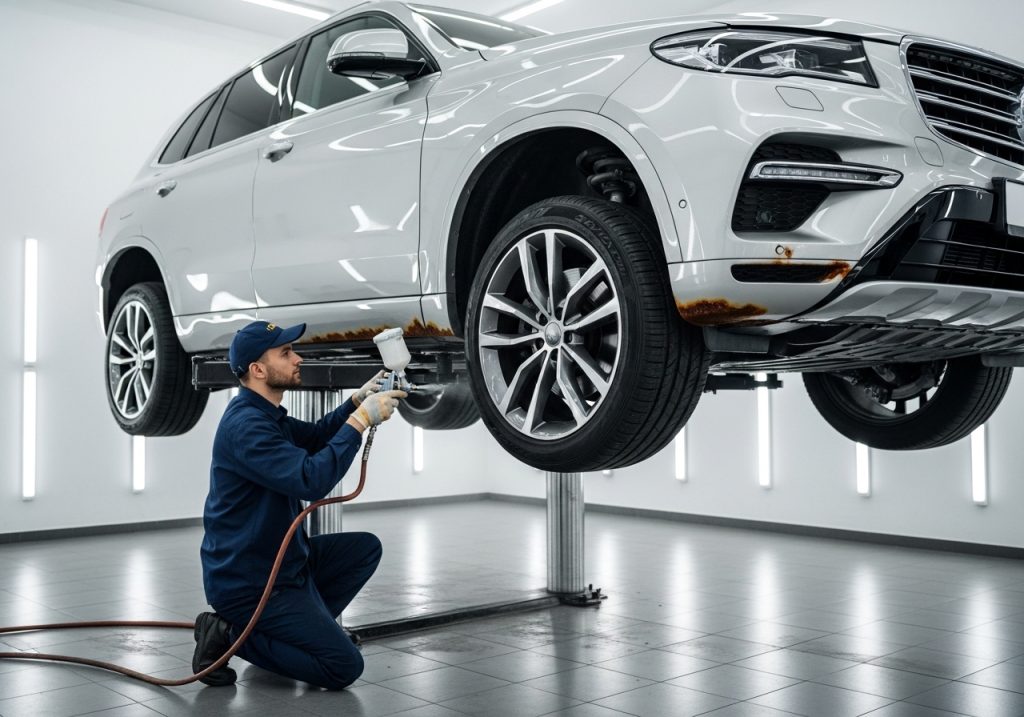
The most important surface to coat is the undercarriage. This is the entire underside of the car including the chassis frame. The chassis sits closest to the road and faces constant exposure to water, mud, road salt, and debris. When it rains the undercarriage takes the full impact of water splashing up from the road. In winter road salt gets thrown up against the chassis constantly. Anti rust coating applied to the undercarriage creates a thick and waterproof barrier over all of these exposed metal surfaces. This is the foundation of any good rustproofing treatment and should always be the first priority when protecting a car against corrosion.
Wheel Arches and Fender Wells
The wheel arches are the curved panels that sit directly above each wheel. They take a tremendous amount of punishment every time the car moves. Rocks, gravel, mud, and water are constantly being thrown up by the spinning tires directly into the wheel arches. Over time this impact strips away paint and leaves bare metal exposed to moisture. The fender wells are the inner linings inside the wheel arches. These areas trap mud and water and hold moisture against the metal for long periods. Anti rust coating applied inside the wheel arches and fender wells protects these high impact zones from both physical damage and rust. This is one of the most important areas to cover outside of the main undercarriage.
Floor Pans
The floor pans are the flat metal panels that form the floor of the car’s interior. They sit just above the undercarriage and are separated from the road by only a thin layer of metal. Floor pans are very vulnerable to rust because they can trap moisture from both below and above. Water that gets inside the cabin from wet shoes, leaking door seals, or heavy rain can sit on the floor pan and cause rust from the inside. At the same time road moisture attacks from underneath. Anti rust coating applied to the underside of the floor pans seals this metal and prevents moisture from working its way through. Rusty floor pans are a serious problem because they can create holes in the cabin floor that are expensive to repair.
Door Bottoms and Door Cavities
Car doors are hollow on the inside. They contain internal cavities where water can collect if the drain holes at the bottom of the door become blocked. Even when the drains are clear, moisture still gets inside the door and sits against the internal metal surfaces. Over time this causes rust that starts from the inside and eventually shows through the outer paint as bubbling or flaking. The very bottom edge of each door is also prone to rust because water runs down the door and collects along the lower edge. Anti rust coating can be sprayed into the internal cavities of the doors through small openings. The coating flows into tight spaces and coats the internal metal to stop moisture from causing hidden rust damage.
Rocker Panels
The rocker panels are the metal sections that run along the bottom sides of the car between the front and rear wheel arches. They sit low to the ground and face constant exposure to road spray and debris. Rocker panels are a very common place for rust to start and spread. Because they run along the lowest edge of the car body they collect water, salt, and grime very easily. Once rust starts on a rocker panel it can spread quickly into the surrounding body panels and cause expensive damage. Applying anti rust coating to the rocker panels creates a protective layer that stops moisture from reaching the metal and prevents rust from getting a foothold in this vulnerable area.
Trunk and Cargo Area Floor
The trunk or cargo area of a car has a metal floor that is often overlooked when it comes to rustproofing. This area can collect moisture from wet items placed inside, from leaking trunk seals, or from condensation. The metal floor of the trunk sits directly above the rear undercarriage and can be attacked by moisture from both directions. Anti rust coating applied to the underside of the trunk floor protects this area from below. Some detailers also apply a protective coating to the interior surface of the trunk for added protection. Keeping the trunk floor protected is especially important for cars that carry wet gear, tools, or anything that introduces moisture into the cargo area regularly.
Engine Bay
The engine bay is another area that benefits from anti rust coating on specific surfaces. The engine bay faces heat, moisture, and exposure to fluids like oil, coolant, and brake fluid. The metal surfaces in the engine bay including the inner fender walls, firewall, and structural supports can develop rust over time. Anti rust coating applied carefully to the appropriate metal surfaces in the engine bay helps prevent corrosion in this critical area. It is important to note that coating must be applied carefully in the engine bay and must never be applied to hot engine components, electrical parts, or areas where heat buildup could cause problems. A professional will know exactly which surfaces in the engine bay are safe to coat.
Frame Rails
The frame rails are long metal beams that run from the front to the rear of the car as part of the main chassis structure. They are structural components that carry a significant portion of the car’s weight and stress. Frame rails are hollow on the inside which means moisture can get trapped inside and cause rust that is impossible to see from the outside. This internal rust can weaken the frame rail significantly before any visible signs appear on the outside. Anti rust coating is injected into the hollow sections of frame rails to coat the internal walls. This internal cavity coating is one of the most important steps in a thorough rustproofing treatment because it protects the structural strength of the car from the inside.
Suspension Components
The suspension system connects the wheels to the chassis and absorbs the impact of bumps and road irregularities. Suspension components including control arms, subframes, and mounting brackets are made from metal and sit very close to the road. They are constantly exposed to water, road salt, and debris. Rust on suspension components is a serious safety concern because it can weaken parts that are under constant stress and load. Anti rust coating applied to suspension components protects them from corrosion and extends their service life. Not all suspension components can be coated since some require precise metal to metal contact to function correctly. A professional will identify which suspension parts are safe to coat.
Exhaust System
The exhaust system runs along the underside of the car from the engine to the rear. It faces extreme heat from the exhaust gases passing through it as well as moisture and road salt from below. The combination of heat cycles and moisture makes exhaust components very prone to rust. While the hottest parts of the exhaust system cannot be coated with standard anti rust products, the brackets, hangers, heat shields, and cooler sections of the exhaust system can receive protective treatment. Keeping these components protected reduces the rate at which the exhaust system degrades and can extend the time before replacement is needed.
Seams and Joints Throughout the Body
Every place where two pieces of metal meet on a car body is a potential entry point for moisture. These seams and joints are found all over the car including along the roof, around the doors, and throughout the body structure. Water gets into these seams and sits against the metal causing rust that spreads from the joint outward. A professional rustproofing treatment includes sealing these seams with a flexible anti rust compound that fills the gaps and keeps moisture out. This seam sealing is often done in combination with the broader undercarriage and body coating treatment to ensure complete coverage with no gaps left unprotected.
Final Thoughts
Anti rust coating can be applied to a wide range of surfaces on a car. From the undercarriage and wheel arches to door cavities, frame rails, and body seams, there are many areas that benefit from proper rustproofing treatment. Each surface faces its own unique combination of moisture, salt, and physical wear. Covering all of these surfaces thoroughly is the only way to give your car complete protection against corrosion. Working with a professional who understands all of these vulnerable areas ensures that no spot is missed and that your car stays protected from rust for as long as possible.